

On November 1, 2022, the FDA held a virtual public meeting of the CDRH Anesthesiology and Respiratory Therapy Devices Panel of the Medical Devices Advisory Committee, although they have not released any new data or recommendations since Feb 2021. The current FDA statement can be found here. https://www.fda.gov/medical-devices/safety-communications/pulse-oximeter-accuracy-and-limitations-fda-safety-communication
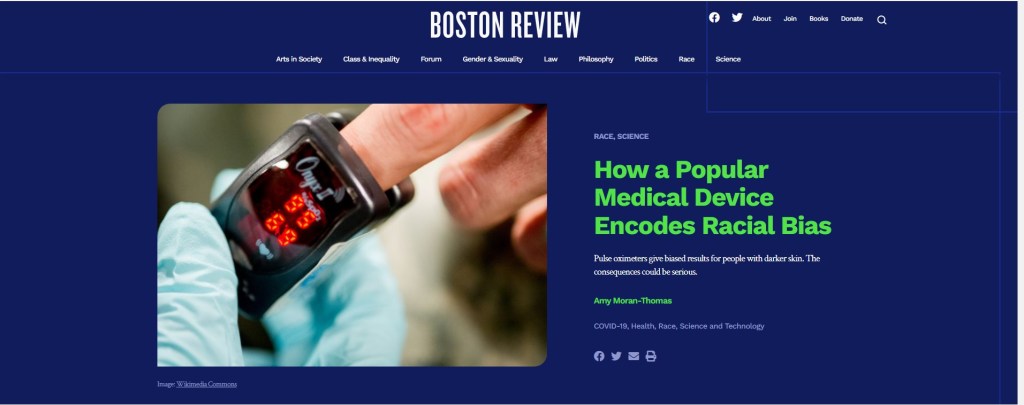
This article in the Boston Review notes errors in blood oxygen saturation on patients with black or dark skin, when comparing the Pulse Oximeter reading with a blood test. A formal test found 12% of 37,000 measurements at 178 intensive care units were misleading. (Published Aug 2020) http://bostonreview.net/science-nature-race/amy-moran-thomas-how-popular-medical-device-encodes-racial-bias
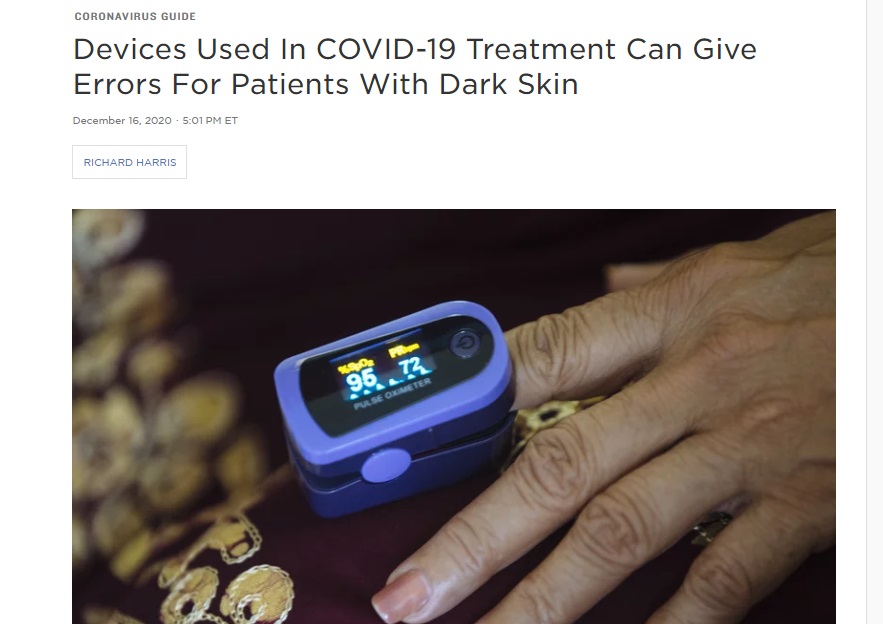
This article in NPR found a clear pattern of errors in a test of 1,067 measurements for nonwhite people, which overestimated the saturation by as much as 8% and could lead to an incorrect indication that the patient was healthy, and a wrong decision to not use oxygen treatment in the emergency room or at home. (Published Dec 2020) https://www.npr.org/sections/health-shots/2020/12/16/947226068/dark-skin-can-lead-to-errors-with-pulse-oximeters-used-in-covid-19-treatment
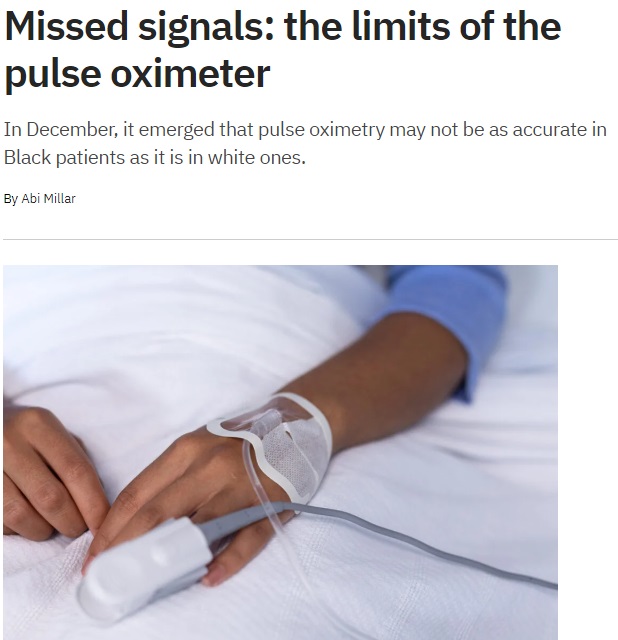
This article does an excellent job laying out some details that other articles miss, including that Pulse Ox discrepancies have been flying under the radar since the 1980s (Originally published May 2021) https://www.medicaldevice-network.com/analysis/missed-signals-the-limits-of-the-pulse-oximeter/
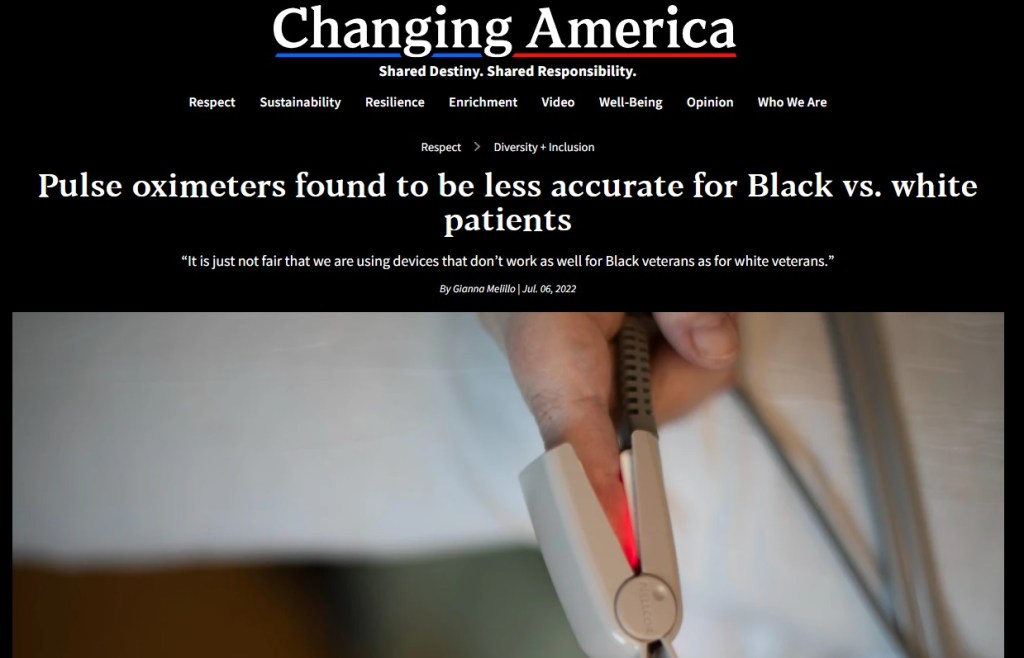
“Data from more than 100 hospitals revealed that within this system alone, there could have been more than 75,000 instances each year where low blood oxygen was missed in a Black veteran but might have been caught if the devices worked as well as they did in white patients, explained lead study author Valeria Valbuena in a press release.” (Published June 2022) https://thehill.com/changing-america/respect/diversity-inclusion/3547673-pulse-oximeters-found-to-be-less-accurate-for-black-vs-white-patients/
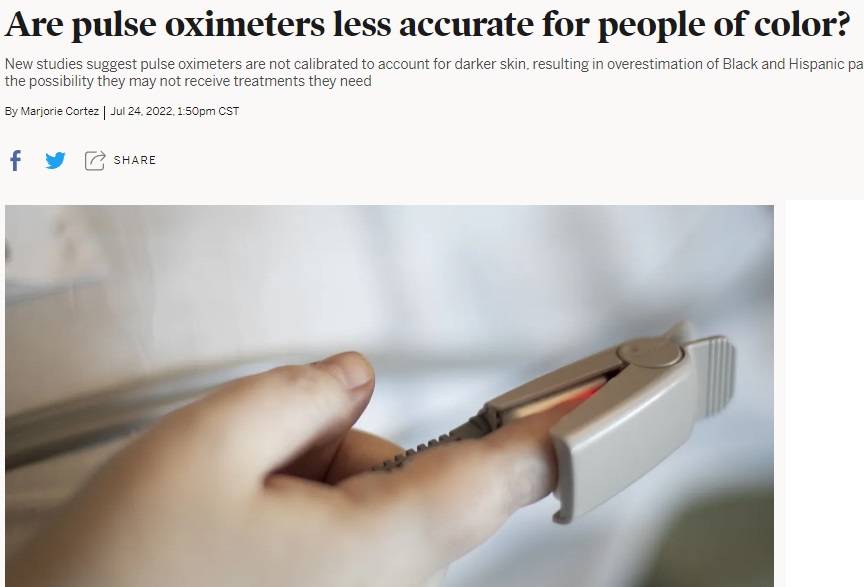
“The study of 3,069 patients in an intensive care unit found that Asian, Black and Hispanic patients had a higher adjusted time-weighted average pulse oximetry reading and were administered significantly less supplemental oxygen for a given average hemoglobin oxygen saturation compared with white patients.” (Published Jul 2022) https://www.deseret.com/2022/7/24/23272907/new-research-pulse-oximeters-less-accurate-people-of-color-blood-oxygen-levels
“Pulse oximetry devices used for warning of low blood oxygenation in covid-19 and other diseases may be missing three times as many cases of occult hypoxaemia in black patients as in white, says a study report published in the New England Journal of Medicine.” (Published Dec 2020) https://www.bmj.com/content/371/bmj.m4926
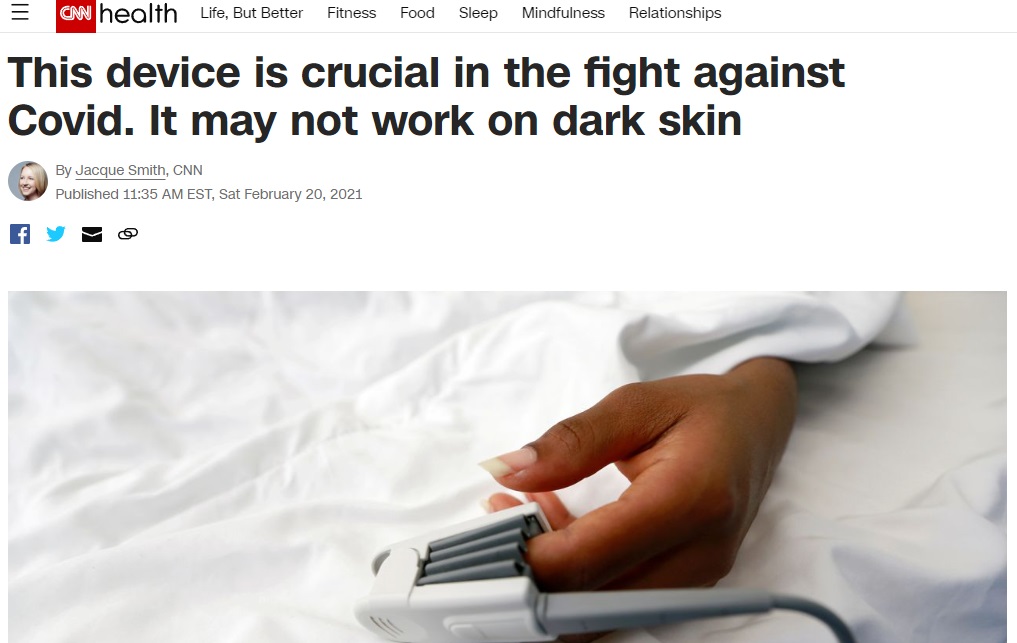
“In White patients, the pulse oximeter gave a misleading number 3.6% of the time. In Black patients, it was 11.7% of the time. […] The takeaway, Dr. Sjoding says, is that pulse oximeters were three times as likely to miss significantly low oxygen levels – or hypoxemia – in Black patients. The study suggests one in every 10 Black patients may be getting deceptive results.” (Published Feb 2021) https://www.cnn.com/2021/02/20/health/pulse-oximeters-dark-skin-covid/index.html
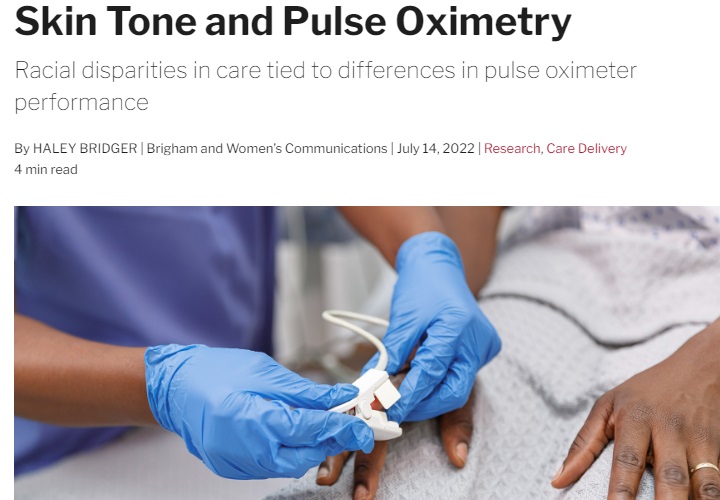
“Doctors also need to be aware of their own unconscious bias, Dr. Gong says. Studies show, for example, when African Americans complain of pain, they are less likely to be given as much (or any) pain medication as Whites. If a patient says they are having trouble breathing, physicians shouldn’t dismiss them just because a pulse oximeter reading is normal. “The only way health disparities can be reduced,” Dr. Gong says, “is if we attack it from multiple ends, from both the larger contributions as well as our personal interactions.’ ” (published Feb 2021) https://hms.harvard.edu/news/skin-tone-pulse-oximetry
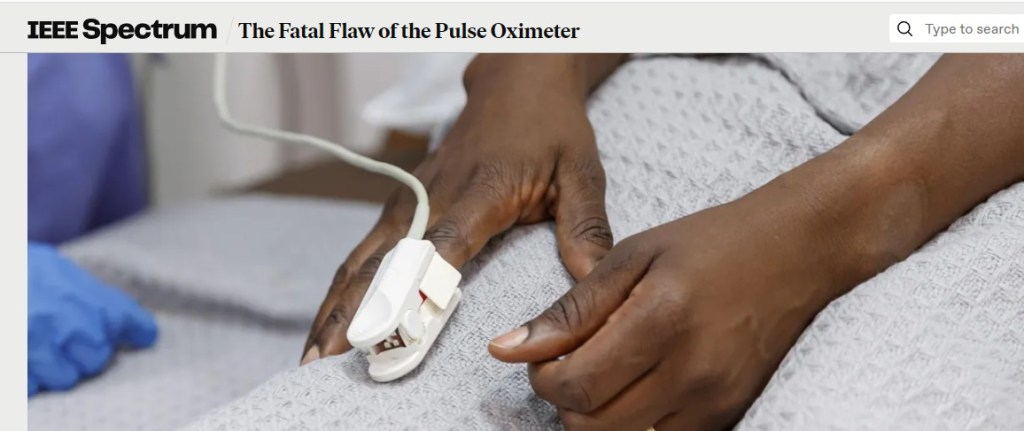
“That device ended up being essentially a gatekeeper for how we treat a lot of these patients,” said Dr. Tianshi David Wu, an assistant professor of medicine at Baylor College of Medicine, in Houston, and one of the authors of the study. “We found that in Black and Hispanic patients, there was a significant delay in identifying severe COVID compared to white patients,” said Dr. Ashraf Fawzy, assistant professor of medicine at Johns Hopkins University and an author of the study. (Published June 2022) https://spectrum.ieee.org/pulse-oximeters-encode-racial-bias-with-clear-consequences-for-covid-19-patients
 Fair Pulse Ox